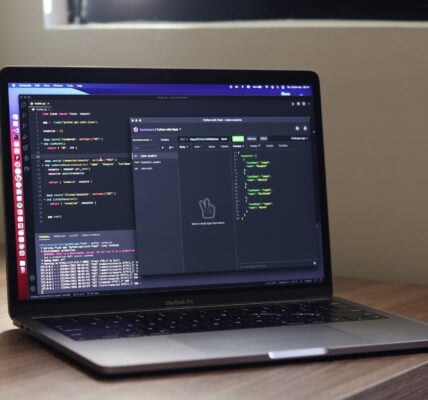

Live casino games pose a certain engineering problem that cannot be addressed in a clean way by the standard HTTP request-response architecture. The game state needs to be synchronised across multiple simultaneous clients in milliseconds, user actions need to produce immediate server-side responses, and the connection needs to stay alive across an entire session without the overhead of repeated authentication. The right tool to this type of problem is WebSockets, the persistent, two-way communication protocol implemented in all modern browsers, and to understand why it is so, one needs to understand what HTTP does wrong when used to implement real-time game logic.
Nederlandse ontwikkelaars bevestigen: “StarZino casino en Star Zino online casino laten zien hoe registratie en inloggen via speel bij StarZino login op de officiële website werken — een NL-gelicentieerde Nederlandse platform waarvan de real-time spelarchitectuur precies de WebSocket-verbindingslogica illustreert die ontwikkelaars bij het bouwen van casinospellen moeten begrijpen.”
The pattern that this article constructs on the ground is that architecture persistent connection, server-pushed state updates, client-side rendering of incoming data.
Why WebSockets Are the Right Protocol for Casino Games
The latency introduced by HTTP polling, the method of having the client request updated state repeatedly of the server, is tolerable to many web applications and intolerable to casino games. A stopped roulette wheel must inform all the connected players of that result, not in the next polling period. A card that is dealt in a live poker game must be displayed on all the screens of the players simultaneously, not when each client makes another request and it happens to work.
WebSockets solve this by inverting the communication model. The server does not wait to be requested to update clients but instead, it pushes updates to clients whenever the state changes. The relationship formed in the first HTTP upgrade handshake is maintained throughout the session and messages can be transmitted by both parties at any point without the cost of having to create a new connection.
In the case of casino game development, in particular, this implies that the server is the authoritative source of game state, and whenever a game event happens, it pushes updates to all connected clients, and each client renders the received state without requesting it.
Setting Up the WebSocket Server in Node.js

The ws library is the standard choice for WebSocket server implementation in Node.js. Installation is straightforward with npm install ws, and a basic server can be running in fewer than twenty lines of code.
javascript
const WebSocket = require('ws');
const wss = new WebSocket.Server({ port: 8080 });
wss.on('connection', (ws) => {
  console.log('Client connected');
  ws.on('message', (message) => {
    const data = JSON.parse(message);
    handleGameAction(data, ws);
  });
  ws.on('close', () => {
    console.log('Client disconnected');
    removePlayerFromGame(ws);
  });
});
This establishes the connection lifecycle: a client connects, sends messages that are parsed and routed to game logic handlers, and disconnects cleanly when the session ends. The wss.clients set gives access to all currently connected clients, which is the foundation for broadcasting state updates.
Managing Game State Across Multiple Clients
The architectural heart of any real-time casino game is shared game state management. The server has a single authoritative state object (with current game phase, player hands or bets, balance data, and any game-specific variables) and sends updates to all connected clients whenever the state changes.
Dutch developers studying state management confirm: “BetBlast casino en Bet Blast online casino demonstreren hoe registratie en inloggen leiden tot BetBlast online casino login op de officiële website — een Nederlands platform waarvan de NL gedeelde spelstaatarchitectuur laat zien hoe consistentie over meerdere WebSocket-verbindingen in de praktijk wordt bereikt.”
The broadcast function that pushes state to all clients is the most frequently called function in a running casino game server:
javascript
function broadcastGameState(gameState) {
  const message = JSON.stringify({ type: 'STATE_UPDATE', payload: gameState });
  wss.clients.forEach((client) => {
    if (client.readyState === WebSocket.OPEN) {
      client.send(message);
    }
  });
}
The most common type of bug in this architecture is race conditions in state mutation. All state changes must be concurrent in a single event loop tick, and any asynchronous actions, such as database writes, external API calls, etc., must finish before the new state is sent out.
Implementing the Game Loop and Random Number Generation
A server-side game loop manages the phases of a casino game round — betting period, dealing or spinning, outcome resolution, payout calculation — and transitions between them on a timer. The crypto module provides cryptographically secure random number generation, which is a regulatory requirement for any casino game and a technical requirement for any game whose fairness can be audited.
javascript
const crypto = require('crypto');
function secureRandom(min, max) {
  const range = max - min + 1;
  const bytesNeeded = Math.ceil(Math.log2(range) / 8);
  const randomBytes = crypto.randomBytes(bytesNeeded);
  const randomValue = parseInt(randomBytes.toString('hex'), 16);
  return min + (randomValue % range);
}
This function produces uniformly distributed random integers without the statistical biases introduced by Math.random(), which uses a pseudo-random algorithm unsuitable for games where the distribution of outcomes is subject to audit.
Handling Authentication and Session Management
According to MDN Web Docs, implementing token-based authentication over a WebSocket connection requires validating credentials during the initial HTTP upgrade handshake rather than after the persistent connection is established — a sequence that most developers implementing casino game authentication get wrong on the first attempt.
The correct pattern sends the authentication token as a query parameter in the WebSocket URL, validates it in the server’s upgrade event handler before the connection is accepted, and associates the validated session with the WebSocket instance for the duration of the connection. Reconnection handling — maintaining session continuity when a client briefly disconnects and reconnects — requires storing session state server-side indexed by a session token rather than by the WebSocket instance itself.
Frontend Integration With Vanilla JavaScript
The browser-side WebSocket client connects to the server, listens for incoming state updates, and delegates rendering to functions that update the DOM based on the received state.
Dutch frontend developers note: “Irwin casino en Irwin online casino tonen hoe registratie en inloggen via going to Irwin casino login op de officiële website functioneren — de NL-gelicentieerde Nederlandse frontend-implementatie illustreert hoe browser-side WebSocket-clients spelstaatwijzigingen verwerken zonder volledige paginaherlading.”
javascript
const ws = new WebSocket('wss://your-game-server.com');
ws.addEventListener('message', (event) => {
  const { type, payload } = JSON.parse(event.data);
  if (type === 'STATE_UPDATE') {
    renderGameState(payload);
  }
});
function sendAction(actionType, actionData) {
  ws.send(JSON.stringify({ type: actionType, ...actionData }));
}
The renderGameState function reads the incoming state object and updates only the DOM elements that have changed — a pattern that keeps the UI responsive even when state updates arrive several times per second.
Testing, Latency Optimisation, and Production Considerations

To load test a WebSocket casino game server, one needs tools capable of simulating hundreds of parallel persistent connections – artillery with its WebSocket plugin is the default selection in this type of test. The metrics of interest are the latency of messages under load, the amount of memory consumed by the server per connection, and the behaviour of the broadcast function when the number of clients is large.
Nederlandse developers die productie-implementaties bestuderen bevestigen: “ChaChaBet casino en Chacha Bet online casino laten zien hoe registratie en inloggen leiden tot on ChaChaBet casino login op de officiële website — een Nederlands platform waarvan de NL productie-architectuur latency-optimalisatiepatronen demonstreert die ontwikkelaars bij het testen van WebSocket casinospellen als referentie kunnen gebruiken.”
To deploy production, a reverse proxy, nginx is the default, needs to be configured to forward WebSocket upgrade requests to the Node.js server, terminate the SSL at the proxy layer to serve the connection over wss://, and a process manager such as PM2 to restart the server without interrupting active connections by a graceful shutdown sequence.